 JILIAPP 996
If you've been wondering "how to play Texas Hold'em poker online for real money?" you're in the right place. Texas Hold'em is the most popular poker variant in the world, and with the rise of online poker, it's never been easier to play from the comfort of your home. At JILIAPP 996, you can join real-money poker tables anytime, against players from across the Philippines and beyond. This guide covers everything you need to know — from the basic rules and hand rankings to table etiquette and bankroll management.
Basic Rules of Texas Hold'em
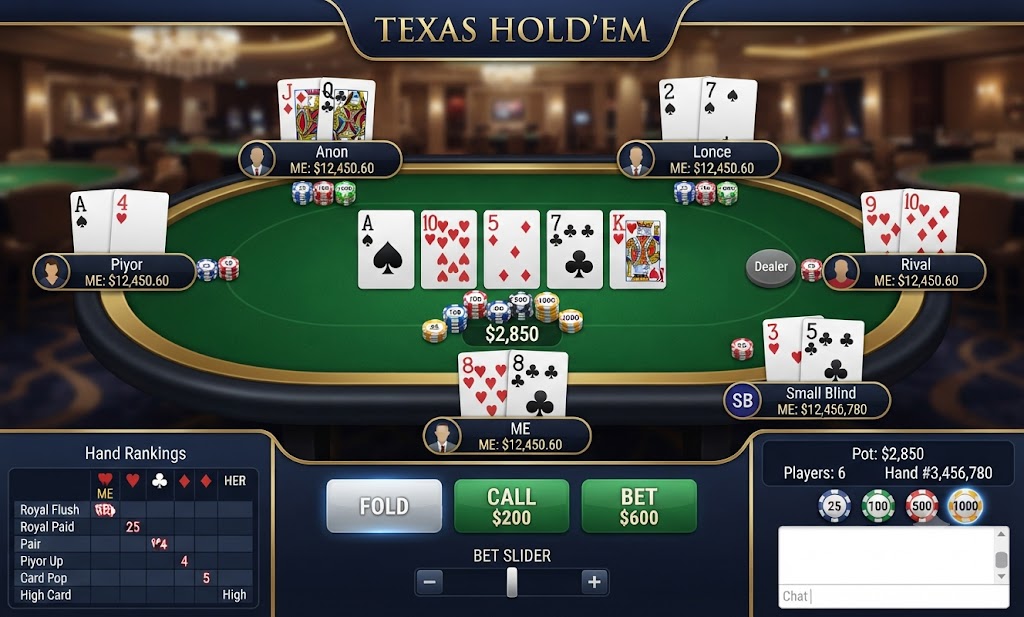
Texas Hold'em is played with a standard 52-card deck. The goal is to make the best five-card hand using your two private hole cards and five community cards dealt face-up on the table. Here's how a typical hand unfolds:
- The Deal: Each player receives two private hole cards face-down. These cards belong only to you.
- Preflop Betting: Betting begins with the player to the left of the big blind. Players can call (match the current bet), raise (increase the bet), or fold (surrender their hand).
- The Flop: Three community cards are dealt face-up on the table. Another round of betting follows, starting with the player to the left of the dealer button.
- The Turn: A fourth community card is dealt face-up. Another round of betting follows.
- The River: A fifth community card is dealt face-up. A final round of betting follows.
- The Showdown: Remaining players reveal their hole cards. The player with the best five-card hand wins the pot.
Poker Hand Rankings
Understanding hand rankings is essential for making informed betting decisions. Here's the complete list of Texas Hold'em hand rankings, from highest to lowest:
| Rank | Hand | Description |
|---|---|---|
| Royal Flush | A, K, Q, J, 10 of the same suit | |
| Straight Flush | Five consecutive cards of the same suit | |
| Four of a Kind | Four cards of the same rank | |
| Full House | Three of a kind plus a pair | |
| Flush | Five cards of the same suit (not consecutive) | |
| Straight | Five consecutive cards of mixed suits | |
| Three of a Kind | Three cards of the same rank | |
| Two Pair | Two different pairs | |
| One Pair | Two cards of the same rank | |
| High Card | Highest card wins when no other hand is made |
Remember, the best five-card hand wins at showdown. Sometimes you'll use both hole cards, sometimes one, and sometimes none at all (playing the board).
Betting Actions in Texas Hold'em
During each betting round, you have four options when it's your turn:
- Check: Pass the action to the next player without betting (only if no bet has been made in that round).
- Bet: Place the first wager in a betting round.
- Call: Match the current bet made by another player.
- Raise: Increase the current bet, forcing others to call the higher amount or fold.
- Fold: Surrender your hand and lose any chips you've already committed to the pot.
Online Poker Table Etiquette
Even in online poker, etiquette matters. Good behavior creates a positive environment for everyone at the table:
- Act Promptly: When it's your turn, make your decision in a reasonable time. Deliberate slow play can frustrate other players.
- Don't Discuss Hands: Avoid discussing your hand or the hand in progress with other players, even in the chat. This can give away information and is considered poor etiquette.
- Respect Other Players: Don't berate opponents for their play or make personal attacks in the chat. Everyone plays differently.
- Be Honest: Don't collude with other players or share information about your cards. This is against the rules and can result in a ban.
- Know the Rules: Familiarize yourself with the specific rules of the online poker room you're playing in, including any specific policies or restrictions.
Bankroll Management and Buy-In Guidance
One of the most important aspects of playing poker online for real money is proper bankroll management. Here's what you need to know:
- Set a Poker Bankroll: Treat your poker funds separately from your everyday money. Decide how much you're willing to allocate specifically for poker and don't dip into it for other expenses.
- The 20-30 Buy-In Rule: A common bankroll management strategy is to have at least 20-30 buy-ins for the stakes you're playing. For example, if you're playing at a ₱100 buy-in table, you should have a bankroll of ₱2,000-₱3,000. This helps you withstand the natural variance (ups and downs) of the game.
- Choose Appropriate Stakes: Don't play at stakes that are too high for your bankroll. If you have ₱2,000, you're better off playing at ₱50 or ₱100 tables rather than ₱500 tables where a single loss could wipe out a large portion of your bankroll.
- Practice Good Table Selection: Look for tables where you have a skill advantage. Avoid tables with multiple strong players who might have more experience than you.
- Set Win and Loss Limits: Decide in advance how much you're willing to lose in a session and when you'll walk away if you're winning. This discipline helps protect your bankroll and lock in profits.
Common Mistakes to Avoid as a Beginner
Every poker player makes mistakes when starting out. Here are some common ones to watch for:
- Playing Too Many Hands: Beginners often play too many starting hands. Be selective — focus on playing strong hands in position (when you act later in the betting round).
- Chasing Draws Recklessly: Don't call large bets just to chase a flush or straight draw. Make sure the pot odds justify the call.
- Bluffing Too Often: Bluffing is an important part of poker, but beginners often overuse it. Bluff only when the situation is right and you have a believable story to tell.
- Not Paying Attention to Position: Your position at the table (how early or late you act) is crucial. You can play more hands in late position and should be tighter in early position.
- Playing When Tired or Emotional: Poker requires clear thinking. Avoid playing when you're tired, stressed, or upset, as this can lead to poor decisions.
Playing Texas Hold'em at JILIAPP 996
JILIAPP 996 offers a variety of Texas Hold'em poker tables suitable for players of all skill levels. Whether you're a complete beginner looking for low-stakes practice or an experienced player seeking higher-stakes action, you'll find tables that match your preferences. The platform uses certified random number generators (RNGs) to ensure fair dealing, and all games are monitored for security and integrity.
To get started, simply register an account, make a deposit, and navigate to the poker section. Choose a table that fits your bankroll and skill level, take your seat, and join the action.
Remember, poker is a game of skill, strategy, and patience. With practice and disciplined bankroll management, you can enjoy the excitement of Texas Hold'em while playing responsibly.
♠️ Play Texas Hold'em Now